
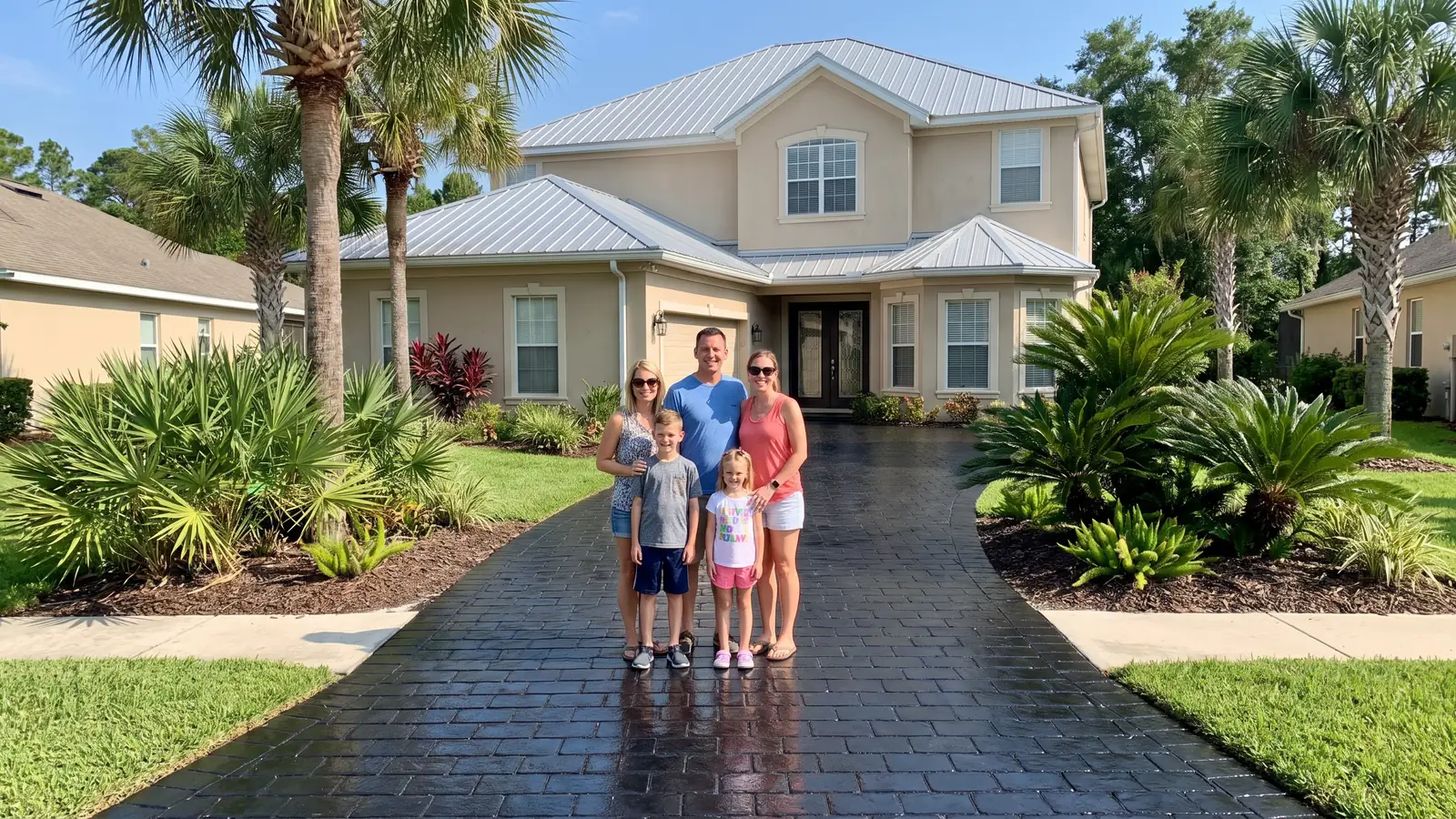
Paver sealing for Argyle Forest homes
Paver Sealing in Argyle Forest, FL
Argyle Forest homes went up in phases, so each street's pavers age differently; call (904) 872-8339 for a free estimate.
- Brings out deeper paver color
- Fresh joint sand helps lock pavers in place
- Gives weeds less room to grow
- Makes the surface easier to keep clean
- Free estimate, no obligation
Request a Free Estimate
Free, no obligation.
Fast, careful paver sealing in Argyle Forest
A request for paver sealing in Argyle Forest gets a free estimate and an answer within 1 business day, usually much sooner. A local contractor takes on the wash, the sand and the sealer for driveways, lanais, pool decks and walks on Jacksonville's Westside. To start, call (904) 872-8339.
Think about the slab outside your garage. Years of summer storms have thinned the sand between the stones, and the tan has gone pale. Once it is washed, re-sanded and sealed, the whole surface reads as one color again. Describe it to the contractor, and you can ask for a free estimate.
Argyle Forest began as a plan in 1975 and filled in street by street. A driveway on one block may be thirty years old, and the next block's may be ten. When you call (904) 872-8339, name your street, because the age of your pavers shapes the job.
Why hire a local paver sealing contractor in Argyle Forest?
Argyle Forest was built over many years, so one street's pavers can be a decade older than the next street's. A local contractor who knows that sizes the job to your street, so ask for a free estimate.
Free, in person
A contractor walks your Argyle Forest property at no charge and quotes the job before anything starts.
A range to check bids
Published Jacksonville pricing runs $1.75 to $3.25 a square foot, cleaned, sanded and sealed. Measure every bid against it.
Pick the sheen
Choose matte for a quiet lanai, or a wet look for more shine. Wet look shows scuffs sooner.
Nothing to sign yet
The date and the finish are yours to choose. An Argyle Forest estimate commits you to nothing.
Get Your Free Estimate in Argyle Forest
Tell us about your pavers in Argyle Forest.
Free, no obligation
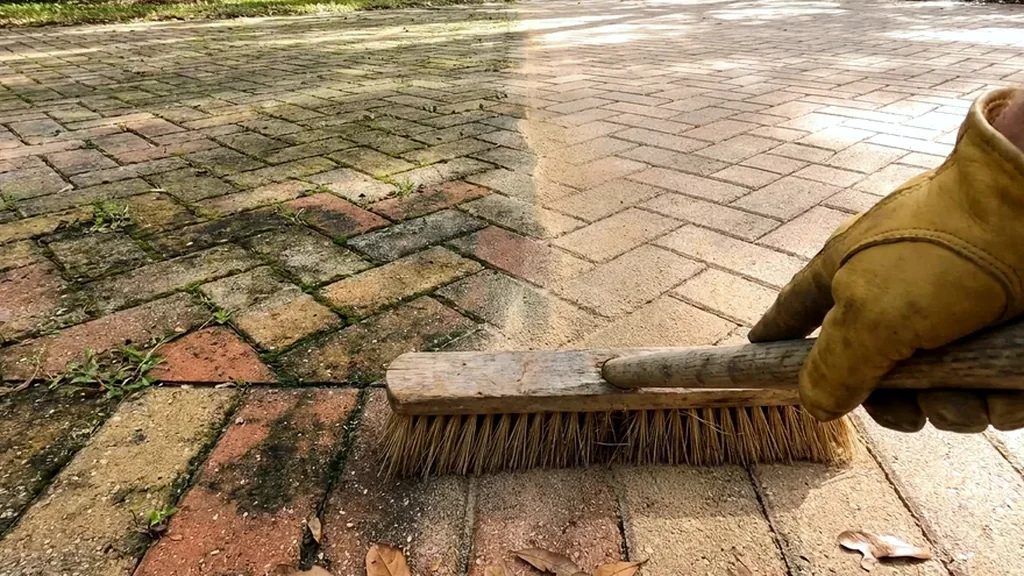
What paver problems show up most in Argyle Forest?
Edges that drift on older pavers
A paver maker says a weak or poorly compacted base is a leading cause of sinking, shifting and cracking. It also says missing edge restraints let pavers drift into gaps. Tax records put most Argyle Forest homes at 1981 to 2003, so many drives and walks have had decades to settle. Sealing locks in whatever is there, which means low spots get repaired first. A dip sealed over stays a dip, so it is worth pointing out any spot where water stands. Candlewood alone has 202 homes built from 1979 into the 1990s, and Bishopwood has 194 from 1977, so whole streets reached the same age together. Ask whether edge repair sits in the quote or on its own line. A paver that has already shifted will not tighten up under a coat of sealer.
Flat ground that stays wet
The USDA describes the Pottsburg soil series, first mapped in Duval County, as fine sand on flats with a seasonal high water table 0 to 24 inches deep. Level ground like that drains slowly after a storm. Pavers sitting on it dry slowly too, and sealer needs a dry surface. A job here may have to wait an extra day or two. Ask the contractor how the low corners of your driveway drain. Because the water table can sit that close to the top, a heavy rain may leave low corners soggy after the sky has cleared. A paver that stays damp for days is also the one most likely to grow algae, so slow drying feeds the next problem. Level ground is the usual reason.
Finish rules in your HOA papers
Some Argyle Forest sections have a homeowners association and some do not. Florida law limits an association to what its documents say or reasonably imply, and it must treat every owner the same. A local paver page draws a line: natural-look sealer may pass as upkeep, and high gloss is likelier to need a vote. Check your papers first, then pick the shine. Condo owners along Argyle Business Loop usually answer to an association for shared walkways, while owners in a section with no HOA decide for themselves. Ask the board for its guidelines in writing, since Florida law ties its power to what they say. A written answer before the job beats an argument after it.
Green film near the small lakes
Plum Tree has homesites backing onto small internal lakes. The Royal Horticultural Society notes that algae thrive in wet conditions and spread faster in shade with still air. A lanai at the water's edge may go green first. The film has to be washed off and the surface dried before any sealer goes on. Pool decks and lanais that catch less sun can follow the same pattern. Plum Tree's lots date from 1988 to 2014, so a pond-side lanai there may be anything from new to thirty years old. Cleaning lifts the film, and a fresh coat then slows how quickly damp and stains soak in. Expect the wash to take longer where the green has had years to build.
A coat nobody wrote down
A street that has changed owners since 1990 may have pavers with no record of what was put on them. A water-based coat cannot be laid over a solvent-based coat, which is why the old product has to be known. 904 Paver Sealing says it spends 2 to 3 hours of prep for every hour of sealing, and that failing old sealer may need stripping. Working out what is on the surface comes before anything else. Bring up any past sealing you remember, even if it was years ago. Argyle Corners, Plum Tree and Candlewood were built at different times, so no single coat is likely to be common to the whole community. Old receipts or product names, if you have them, can settle the question quickly. A short test of the surface at the first visit also saves a surprise later.
Does my Argyle Forest street change what my pavers need?
Yes, because the community grew in phases, and the age of your street sets the starting point. Argyle dates to 1975, when a developer drew up a 25 year plan, and tax records show homes built from 1981 to 2003. Name your street when you ask for a free estimate, and the contractor can plan around its age. A newer street will usually need less repair than one that dates to the early 1980s.
Plum Tree, off 103rd Street, has homes built from 1988 to 2014, some backing onto small lakes, with its own homeowners association. Argyle Corners includes homes from 1991, and Candlewood has 202 homes built from 1979 into the 1990s. Bishopwood has 194 homes from 1977, and Heather Ridge has 60 from the mid-1980s. Call (904) 872-8339 and name your section.
Condo units sit along Argyle Business Loop, and shared walkways there are usually the association's to manage. Florida law limits an association's review to what its papers say or reasonably imply. Check those papers before you choose a finish, then ask for a free estimate. Have the product name and finish listed on the written estimate.
What does paver sealing cost in Argyle Forest?
Published Jacksonville prices run $1.75 to $3.25 a square foot for a clean, sand and seal. Where an Argyle Forest job lands depends on old sealer, joint sand and total area. A lanai costs less than a driveway with a pool deck. Call (904) 872-8339 for a figure that fits your pavers.
Stripping adds cost, and so does repair. A cost guide says white, hazy or flaking sealer from a prior job must come off first. Sunken sections are fixed separately from sealing, so ask whether repairs sit in the quote. To get it in writing, ask for a free estimate.
Layout counts too. An open drive with room around it goes faster than a walled lanai, and a deck with steps takes longer than a flat slab. Describe your layout when you ask for a free estimate, and the number can reflect it.
| Paved area | Typical example | Clean, sand and seal |
|---|---|---|
| 300 sq ft | Small patio or walkway | $525 to $975 |
| 600 sq ft | Two car driveway | $1,050 to $1,950 |
| 1,000 sq ft | Large driveway or pool deck | $1,750 to $3,250 |
| 1,500 sq ft | Driveway plus pool deck | $2,625 to $4,875 |
Math based on the $1.75 to $3.25 per square foot that Northeast Florida paver companies publish. Your contractor sets the actual price after seeing the surface. Repairs, leveling and stripping failed sealer are usually extra.
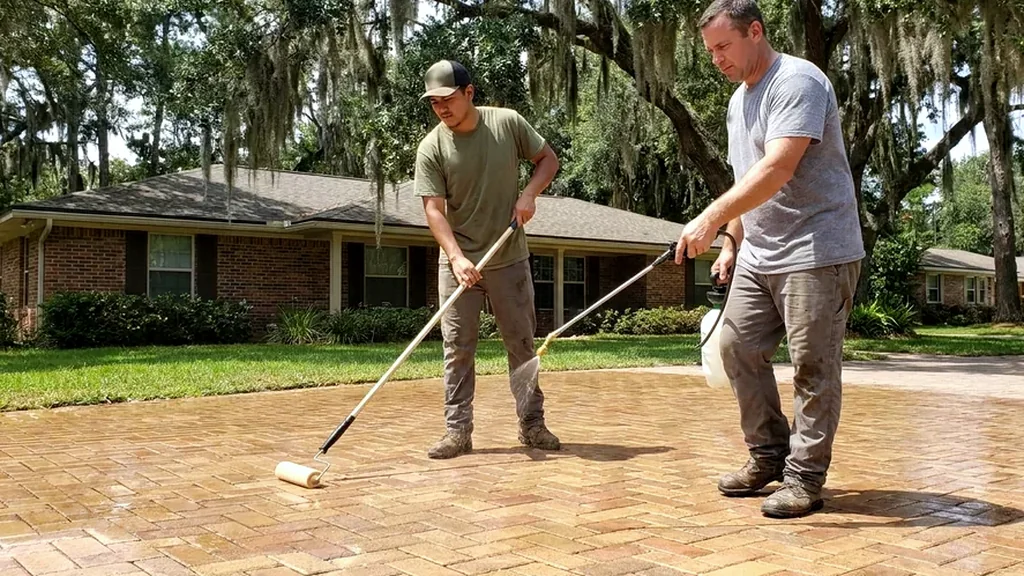
How does a paver sealing job work in Argyle Forest?
Survey the slab and the soil
First comes a walk around the driveway, lanai and walks. Level ground like Argyle Forest's holds water, so the contractor notes low corners and edges that have drifted. Dips are marked for repair, since sealer would hold them in place. Any sign of an earlier coat is noted too.
Lift the algae and grime
Next the surfaces get washed. Algae near the small lakes and film from summer storms come off at moderate pressure, because a trade supplier warns that more than 3,000 PSI can strip standard concrete pavers. Rust from sprinkler spray gets treated here.
Brush in new sand
Washing pulls the old sand from the gaps. Fresh sand is brushed in until the joints are full, so the stones stay steady and the sand stays put. On homes from the 1980s, expect to use more of it.
Wait out the damp
The slab has to be dry before it is sealed. Product sheets ask for about a day after cleaning or rain, and slow-draining ground can stretch that. Waiting beats sealing in moisture.
Roll on the finish
Last, the sealer goes down in matte, satin or wet look. Many local pros spray it and then roll it so it lies even. One local company asks for about a day before cars return.
Complete paver services in Argyle Forest
The work moves in four beats: wash, sand, dry, seal. Most of the hours go into the first three. Sealer is the last thing down, so nothing dirty gets locked under it. To hear how long it takes on your lot, call (904) 872-8339.
Driveways here take tires and sun, lanais take pond-side damp, and pool decks take splash. A deck needs grip when wet, so ask for a sealer with traction. Front walks fall somewhere in between. Tell the contractor which of these you own when you ask for a free estimate.
Solvent-based and water-based sealers do not mix, so the old coat limits your options. Film-forming types add gloss, and penetrating types add none. One Jacksonville company lists four finishes, from wet look high gloss to natural matte. Call (904) 872-8339 to sort them out.
May through September is the wet stretch here, with short, hard storms. After a wash, plan on at least a day of dry weather before sealing. Argyle Forest's flat ground drains slowly, so a damp week can push your date. To book around the weather, ask for a free estimate.
Questions to ask before you hire
- How do you handle the afternoon rain we get in summer, and how do you reschedule?
- Do you re-sand the joints once the pavers are dry?
- Which sealer brand and finish will go on my pavers, and why that one?
- How long before I can park on the driveway again?
- Do you carry workers' compensation as well as liability insurance?
- Who do I call if I see a problem after the job is done?
- How do you protect my irrigation heads and landscape lighting?
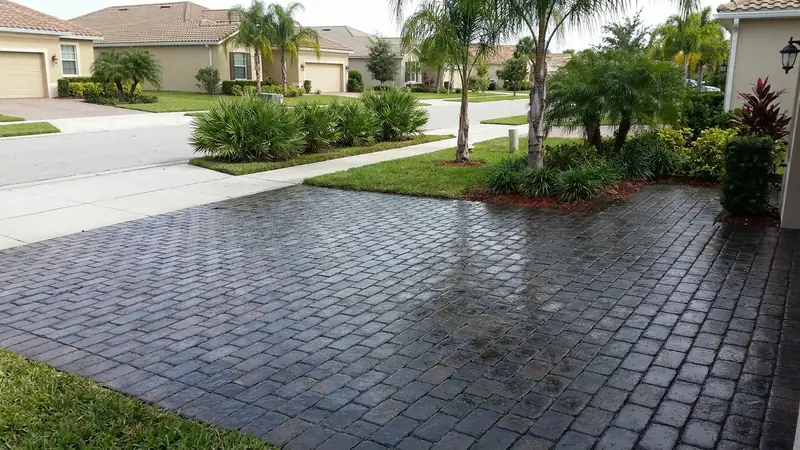
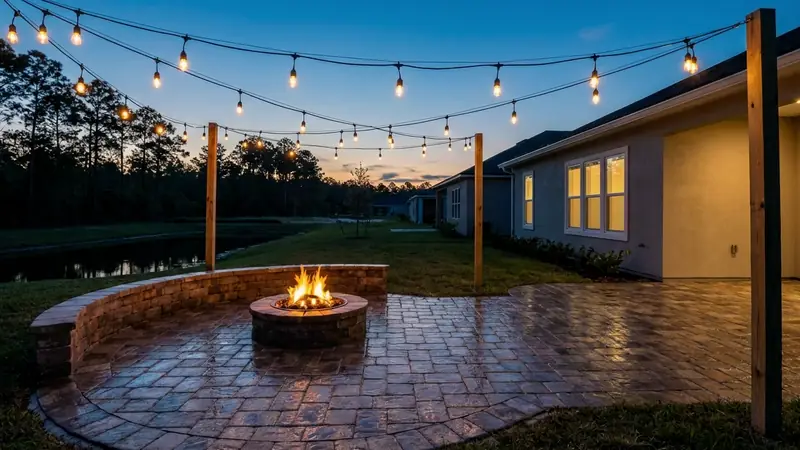
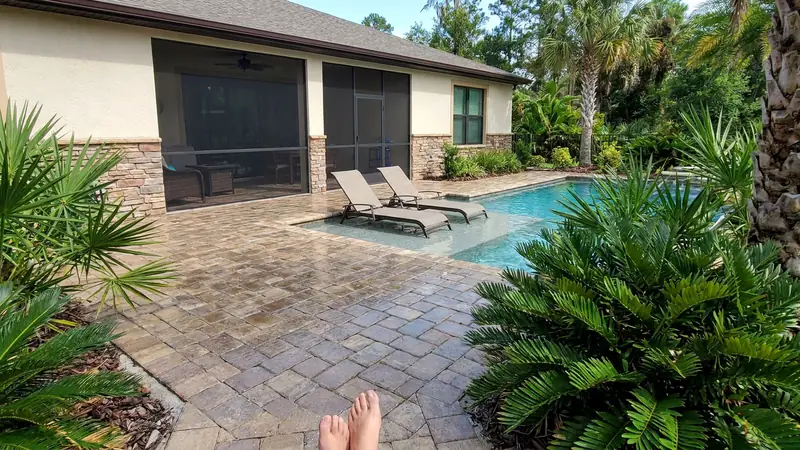
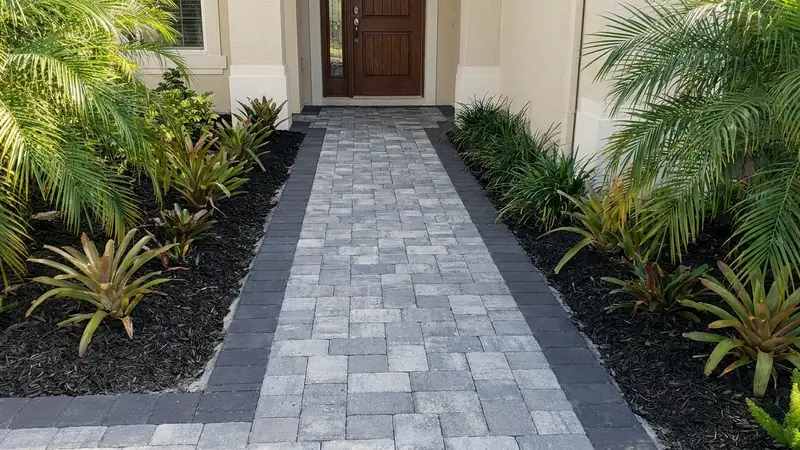
What do sealed pavers look like around Argyle Forest?
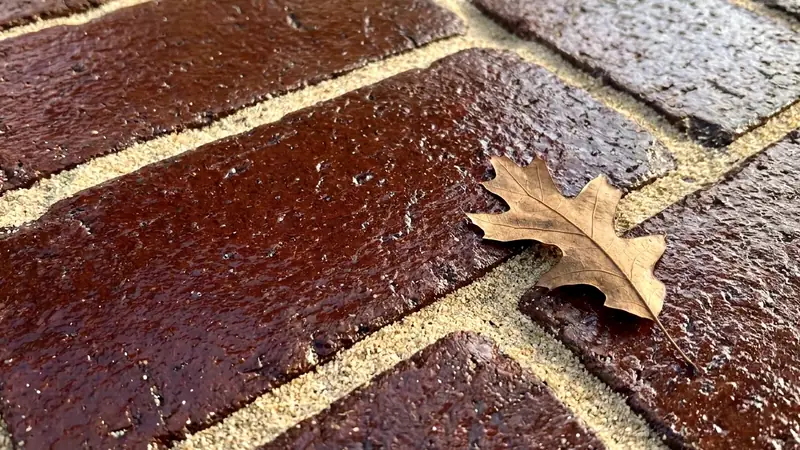
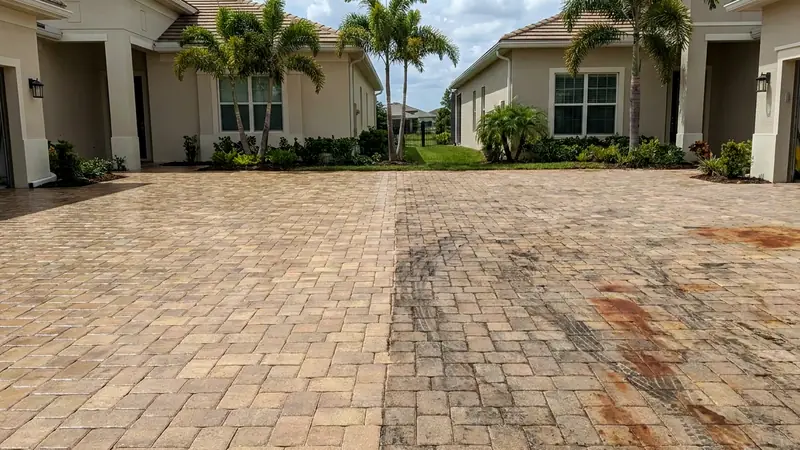
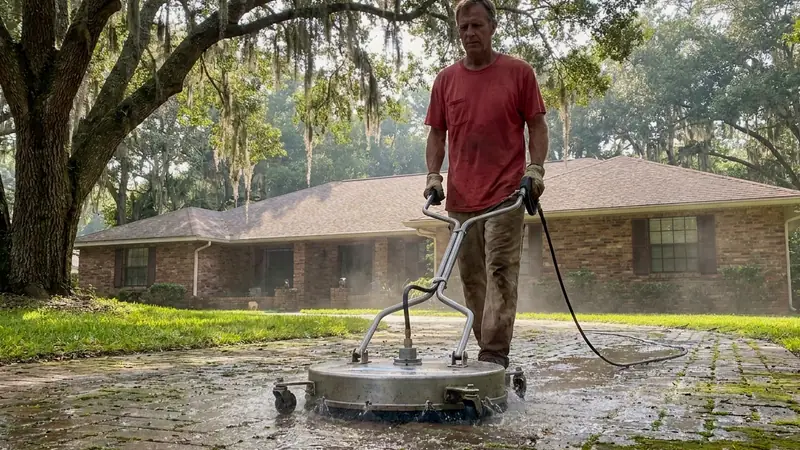
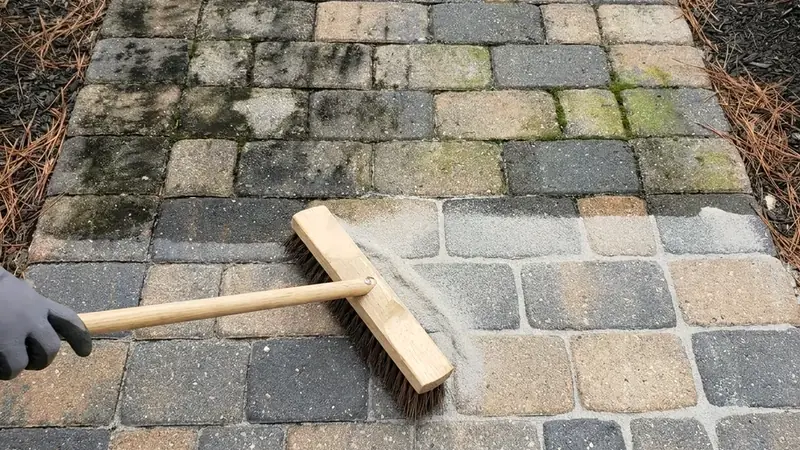
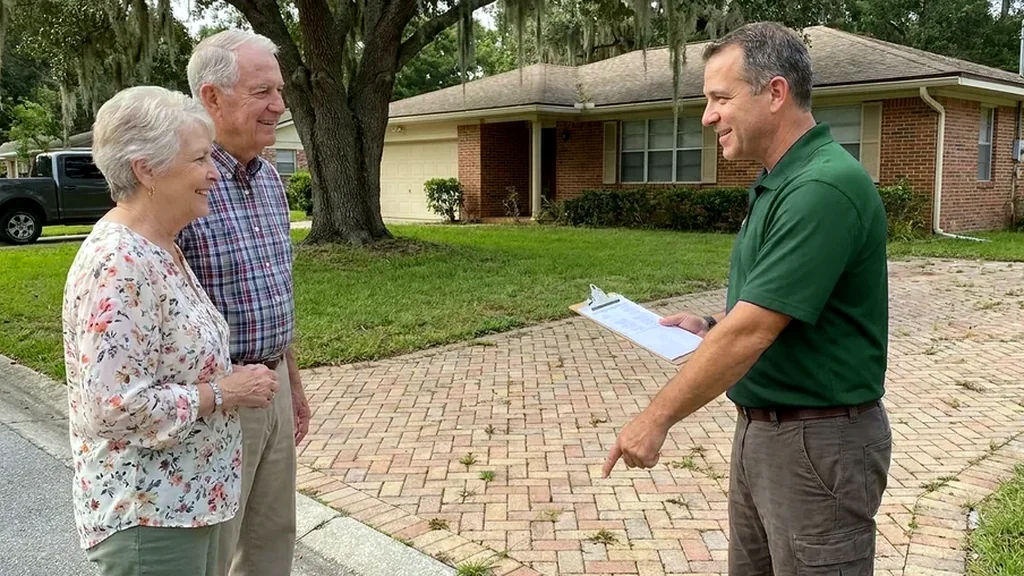
Why local matters in Argyle Forest
Ask a contractor from across the river which phase of Argyle Forest you live in, and you may get a blank look. A local one asks first, because the answer tells how old your pavers are and how much repair to expect. Call (904) 872-8339 to reach someone who works these streets.
Rain does most of the damage here, and flat ground keeps it around. A contractor who has worked this area leaves slack in the schedule for drying. That beats a rushed coat that clouds. Ask how a date would be set when you ask for a free estimate.
Rules differ from section to section. Some streets have an HOA, some do not, and condo walkways belong to the association. A local contractor raises approvals before the finish is chosen. If you are unsure, ask for a free estimate and ask, with no obligation.
How did Argyle Forest get started, and does it matter for my pavers?
Yes, a little, because the way it was built explains why pavers vary so much from street to street. A developer drew up Argyle in 1975 as a 25 year plan, and it was one of the first developments of regional impact approved in Florida. In 1992 the city paused building until Argyle Forest Boulevard was widened from two lanes to four, which finished in 2005 and 2007. To ask about your street, ask for a free estimate.
Argyle Forest Park on Acanthus Drive was donated in 1988 to the Argyle Athletic Association, and much of it went to the City in 1994. The Argyle Branch library sits on Old Middleburg Road South, with a community room and two study rooms. If you can name a park or the library, the contractor can find your street. Call (904) 872-8339 and mention the nearest one.
Frequently Asked Questions
Is it good to seal pavers in Argyle Forest?
Yes, in most cases. Sealing locks joint sand in place and helps keep stains from soaking in. On flat Argyle Forest ground, where summer rain flushes sand out, that protection matters. Pavers that are sunken or drifting need repair first. Tax records put most Argyle Forest homes at 1981 to 2003, so plenty of driveways here are old enough to be due for a fresh look.
How much does it cost to seal pavers in Argyle Forest?
Plan on $1.75 to $3.25 per square foot to clean, sand and seal, the range Jacksonville companies commonly publish. Old sealer that must be stripped moves a job higher. Have the square footage spelled out on the quote. A lanai off a Plum Tree home is a smaller bill than a driveway and pool deck in the same section.
Why is paver sealing so expensive?
Most of the cost is prep. One local company puts it at 2 to 3 hours for each hour of sealing. Washing, re-sanding and drying all come before the sealer, and failing old sealer may need stripping. Flat ground adds waiting time too, since slow-draining pavers can take longer to dry before the coat.
How often should pavers be sealed in Argyle Forest?
Plan on a coat lasting two to five years, which is the span local companies quote. A sunny driveway sits toward the short end. A shaded walkway with light traffic can go longer. A paver that drinks water instead of beading it is due for a new coat. On flat ground that stays damp, check the shaded edges first, because they tend to wear out ahead of the sunny middle.
Is it better to spray or roll paver sealer?
Both, usually. The sprayer lays the sealer down fast, and the roller follows to even it out and push it into the joints. Each tool has a weakness alone: rolling can leave lap marks, and spraying can leave too much on textured pavers.
Can my Argyle Forest HOA tell me what finish to use?
Only as far as its papers allow. Florida law ties an association to what its declaration or guidelines state or reasonably imply, and it has to treat owners equally. A natural-look coat is the likelier of the two to pass as routine upkeep. If your section has no HOA, the finish is your own decision.
Will sealing fix sunken pavers in Argyle Forest?
No, sunken sections need repair first. Sealer holds a low spot exactly as it finds it. A weak base or missing edge restraint is often the cause, and the contractor can point to where it is. Pointing out any low corner at the first visit helps the contractor price repairs correctly.
Who decides whether condo walkways in Argyle Forest get sealed?
Usually the association, since shared patios, courtyards and walkways are managed by it. Condo units sit along Argyle Business Loop, so ask your board before you book. If the pavers are inside your own fence or at your own door, the call is yours. Where an association owns the walkway, the board may also choose the product and the date.
Ready for a Free Estimate in Argyle Forest?
Call (904) 872-8339 and tell us about your pavers.
Free, no obligation