
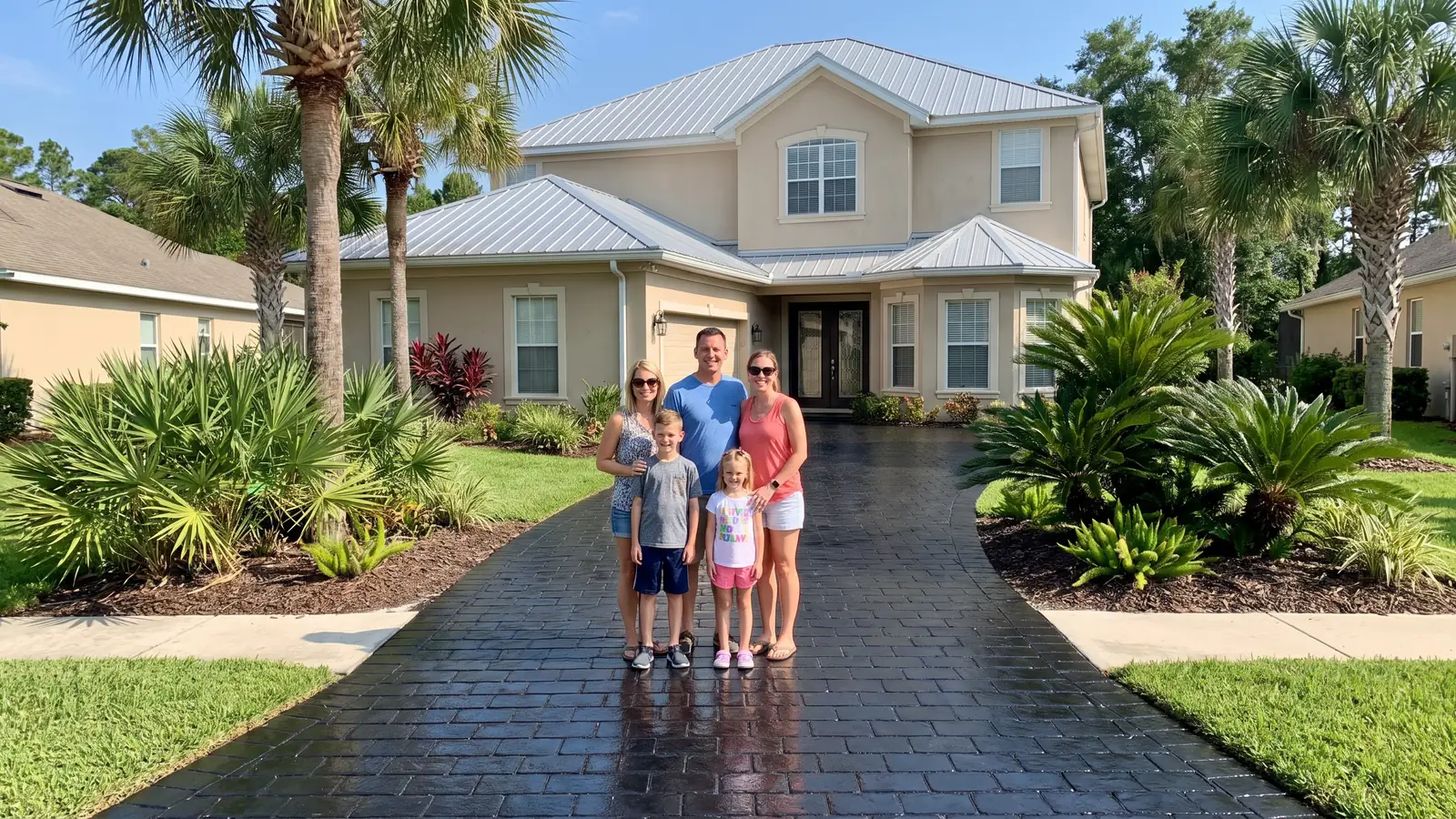
Paver sealing for Saint Johns homes
Paver Sealing in Saint Johns, FL
Saint Johns homes are mostly newer single-family houses, so call (904) 872-8339 for a free paver sealing estimate.
- Brings out deeper paver color
- Fresh joint sand helps lock pavers in place
- Gives weeds less room to grow
- Makes the surface easier to keep clean
- Free estimate, no obligation
Request a Free Estimate
Free, no obligation.
Fast, careful paver sealing in Saint Johns
Homeowners in Saint Johns can book paver sealing from a local contractor, starting with a free estimate. The work covers driveways, lanais and pool decks in Julington Creek Plantation, Aberdeen and the neighborhoods off State Road 13. Call (904) 872-8339, and a reply is on its way within 1 business day, usually much sooner.
If your driveway went in with the house and has never been coated, the color is probably thinner than the day you moved in. Weeds are starting in the seams, and the pool deck feels rough underfoot. A clean, a refill of sand and a first coat bring the pavers back, and you can ask for a free estimate to see what that costs.
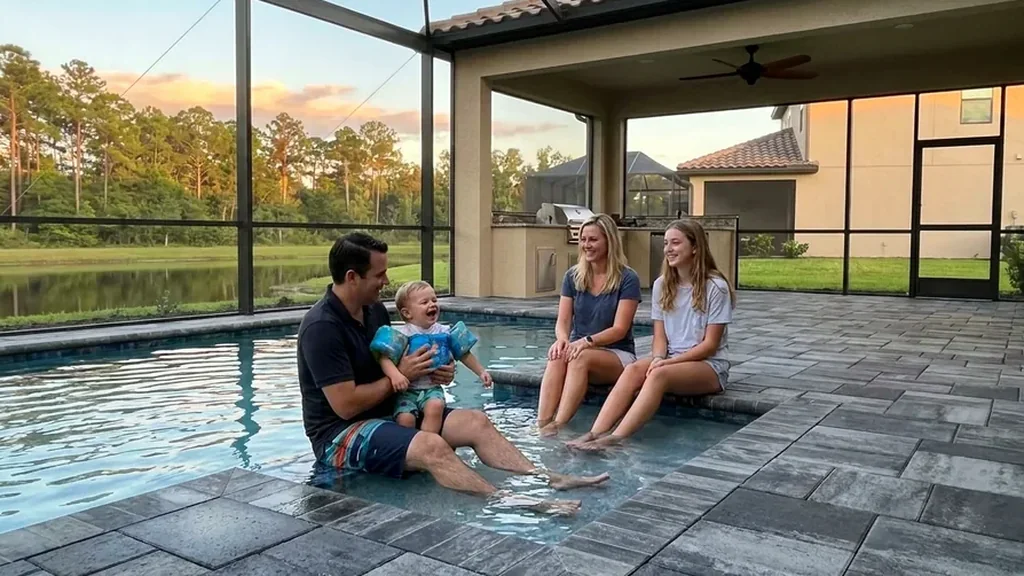
Why hire a local paver sealing contractor in Saint Johns?
Census estimates for this ZIP put the median home build year at 2009, so many Saint Johns pavers are at a first or second coat. To see where yours stand, ask for a free estimate.
A free walk-through
Book a visit and a local contractor inspects your pavers, then hands you a number. Saying no is fine.
The published range
The published price range in this region is $1.75 to $3.25 per square foot to clean, sand and seal. Hold any Saint Johns bid up against it.
Ask about size early
Small patios can run into company minimum job sizes, so mention yours up front. A Saint Johns estimate covers that question too.
Finish and date are yours
Matte, wet look and the work date are your picks. If the numbers do not fit, you walk away.
Get Your Free Estimate in Saint Johns
Tell us about your pavers in Saint Johns.
Free, no obligation
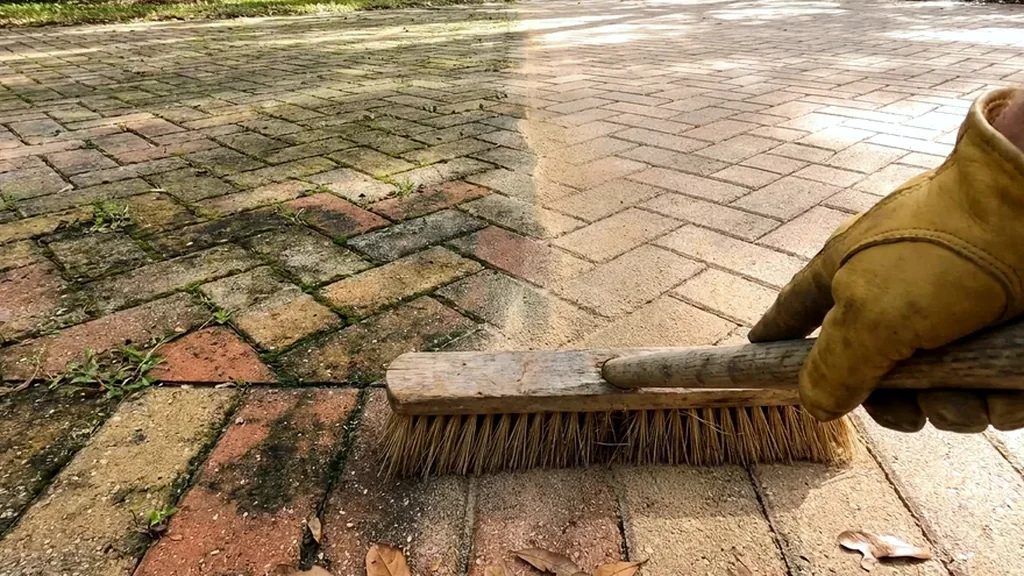
What paver problems show up most in Saint Johns?
A first coat that is overdue
Census estimates for ZIP 32259 put the median home build year at 2009, and most housing units are single-family detached houses. That points to many driveways laid by builders and sealed once, or never. Unsealed pavers fade and lose sand sooner. If yours came with the house, a wash and a first coat is likely the plan. Ask the contractor how the surface looks before you decide. A builder-laid driveway also tells you something about the base, since many were laid in the same few years. If one corner has already sunk, others may follow, so mark what you see. Most occupied units are owner occupied, so the choice to seal sits with each homeowner, not a landlord.
Flatwoods ground that drains slowly
USDA calls the Myakka series, found across Florida flatwoods, poorly drained sand with a water table under 18 inches for one to four months in most years. Not every Saint Johns lot sits on it, but low, flat lots can hold water. Pavers over wet ground settle and stay green. Sealing has to wait until the surface truly dries. After a wet week, give the pavers a few clear days before booking. Shaded corners and the low end of the drive are the last spots to dry. Tides affect the St. Johns River far upstream, which is one reason low lots by the water can stay wet.
Rain that moves the sand
The nearest county weather station, in St. Augustine, averages 50.6 inches of rain a year on 118 days. Heavy rain pushes sand out of the seams. Open seams let in soil, and weeds follow. That is why fresh sand goes in before any coat, and why a thin seam is a reason to call sooner. Rain also carries leaves and grass clippings onto the surface, which hold moisture against the pavers. Sweeping them off between visits helps the joints stay firmer. Summer storms often arrive in the afternoon, so the sand you see in June may be gone by August.
Small patios and short drives
Many Saint Johns lots have compact patios and short driveways. A Jacksonville paver page notes that small patios can run into company minimum job sizes. Doing the driveway, front walk and pool deck in one visit can help a small patio clear that minimum. Mention every surface you have when you ask for a price. A contractor can also tell you if the pool deck is worth adding for a better total. That keeps you from paying a trip charge twice. A pool cage or lanai screen limits ladders and spray, so tell the contractor about it.
Rust marks from lawn sprinklers
University of Florida experts say irrigation water high in iron leaves orange stains. Sprinklers on a newer lawn often reach the driveway edge. Those lines should be treated before sealing, since sealer locks in whatever is under it. Notice where your sprinkler heads point, and tell the contractor about any rust you see. Turning a spray head a few degrees away from the paver edge can stop new lines from forming. Old lines still need treating before the coat goes down. Sweeping lawn clippings and granules off the surface after yard work helps keep marks from setting.
Does it matter which Saint Johns community my pavers are in?
Yes, because the communities were built in different decades by different builders. Julington Creek Plantation, on Race Track Road, covers about 4,120 acres and has about 45 neighborhoods built from the 1990s on. Aberdeen is a 1,316-acre community off the same road. Tell the contractor your community when you ask for a free estimate.
RiverTown sits off State Road 13 and Long Leaf Pine Parkway, with about 3.5 miles on the St. Johns River. Alpine Groves Park, on the same river side, covers 54.5 acres and began as an orange plantation. Tides affect the river far upstream, so ground near the water can stay wetter than inland lots. Call (904) 872-8339 and say which side of State Road 13 you live on.
Many Saint Johns communities have an association. An association can judge the look of changes only by what its declaration or guidelines say, under state law. One Jacksonville paver page says a natural-look sealer may count as upkeep, while a color-enhancing or glossy finish is more likely to need approval. Read your guidelines, then ask for a free estimate.
What does paver sealing cost in Saint Johns?
Start with the published range for the region: $1.75 to $3.25 per square foot to clean, sand and seal. A 600-square-foot driveway is a different job than a 1,500-square-foot driveway with a pool deck, even at the same rate. Call (904) 872-8339 and share rough sizes, and the contractor can tell you where you would land.
Three things move the rate in Saint Johns: shade growth, lost joint sand and whether an old coat has to be stripped. Stripping a failed coat first moves a Saint Johns job above a plain reseal. Minimum job sizes can matter for a small patio. A free written estimate lists each of these, so ask for a free estimate.
| Paved area | Typical example | Clean, sand and seal |
|---|---|---|
| 300 sq ft | Small patio or walkway | $525 to $975 |
| 600 sq ft | Two car driveway | $1,050 to $1,950 |
| 1,000 sq ft | Large driveway or pool deck | $1,750 to $3,250 |
| 1,500 sq ft | Driveway plus pool deck | $2,625 to $4,875 |
Math based on the $1.75 to $3.25 per square foot that Northeast Florida paver companies publish. Your contractor sets the actual price after seeing the surface. Repairs, leveling and stripping failed sealer are usually extra.
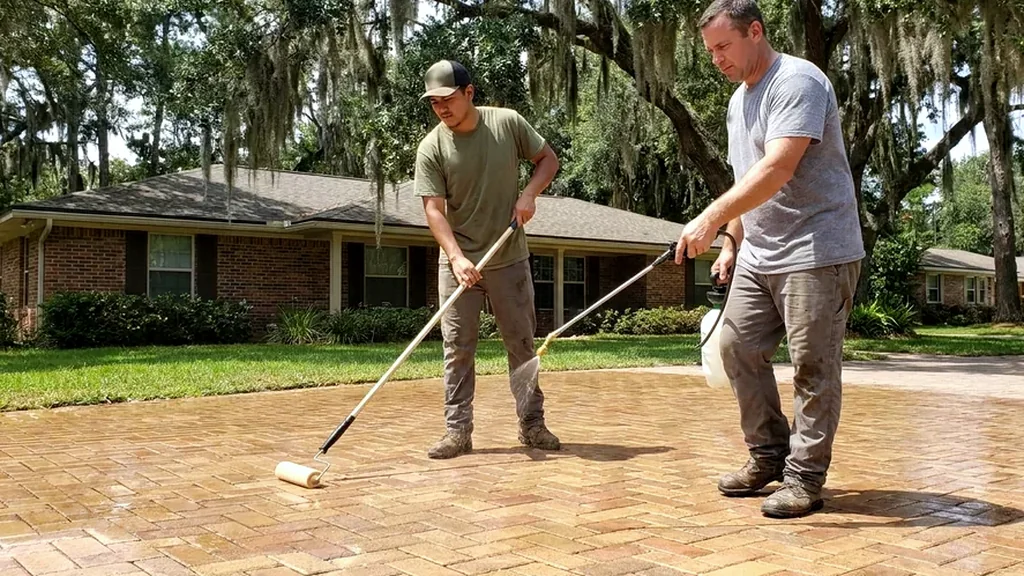
How does a paver sealing job work in Saint Johns?
Match the pavers to the community
The visit begins with two questions: which community are you in, and when was the house built? Those answers tell the contractor how old the pavers are and who likely laid them. The walk that follows marks dips, loose edges and weeds. Anything low or lifted is repaired before sealing, because a coat keeps what it covers. Expect a short written list of repairs and a measured square footage.
Wash at a pressure the pavers can take
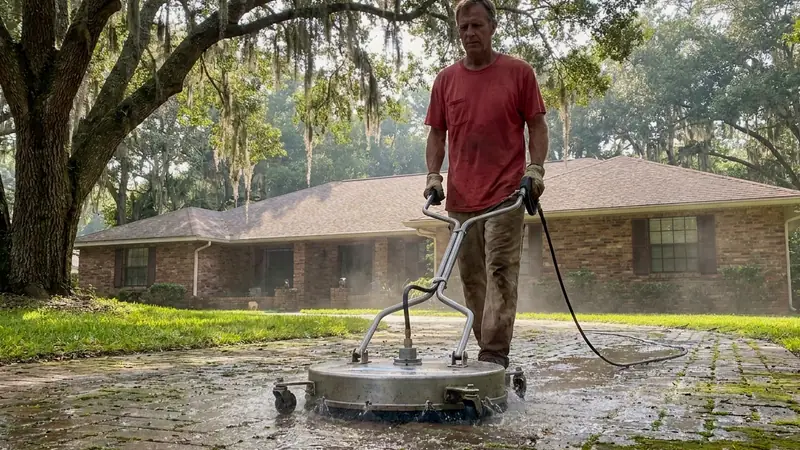
A trade supplier says going past 3,000 PSI on standard concrete pavers risks stripping the surface, so pressure stays moderate. Rust from sprinklers and green growth at lanai edges are treated at this stage. Rinse water is kept off pool water and screens. A first wash on a never-sealed driveway can take longer than a repeat one. Pool decks get a gentler touch than a driveway. Plants near the edge are covered or rinsed with care. Rust stains are treated here too, before any coat goes on.
Refill the joints with sand
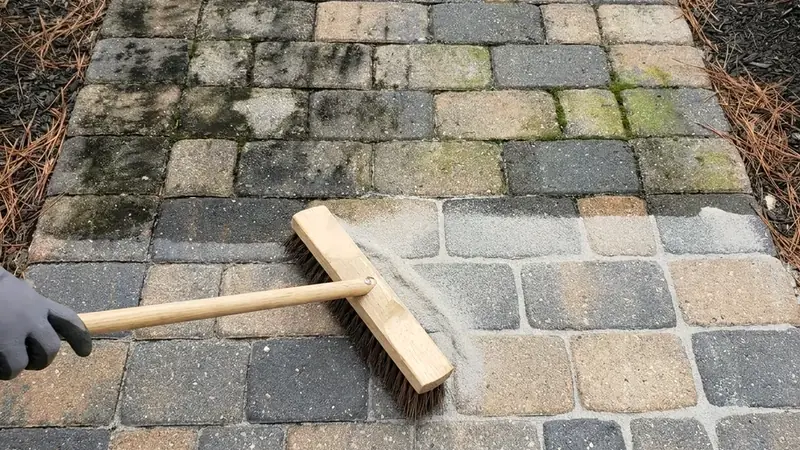
After the wash comes sand, brushed into each seam until it is level, with the extra swept clear. On Saint Johns lots with steady rain, this fill is what stops the coat from bridging gaps. Without it, weeds find the gaps again. Find out how much sand your seams call for.
Give the surface time to dry
One sealer maker wants the surface dry for 24 hours after cleaning or rain. Afternoon storms and flat, slow-draining ground can stretch that wait. The contractor checks the forecast and shifts the day if rain is near. Pavers sealed too soon can trap moisture and cloud the finish. Shaded lanai corners and the low end of a driveway are checked by hand.
Apply the sealer and let it cure
The same trade supplier says the first coat goes on as a spray and then gets back-rolled with a slit foam roller. Film-forming sealers sit on the surface and bind sand, while penetrating ones soak in and leave the look alone. The same sealer maker wants 24 hours of dry weather to cure. Quotes in the region commonly put the next coat two to five years away. Ask which finish and product went on, and keep that name for the next coat. A wet look shows scuffs sooner, so many drive owners pick matte. Keep the receipt or product name, since a future coat should match it.
Complete paver services in Saint Johns
The job runs in a set order: wash, re-sand, dry, then seal. Skipping the wash traps dirt, and skipping the sand leaves gaps. A first coat on a house a few years old is usually the simplest version. To ask what yours would involve, call (904) 872-8339.
Driveways, front walks, pool decks and lanais each wear in their own way. Driveways take tires, pool decks take chlorine and sun, and lanais take shade and spills. Most Saint Johns lots have all four. Tell the contractor which ones you want done when you ask for a free estimate.
A trade supplier sorts sealers into film-forming acrylics, which sit on top and bind joint sand, and penetrating products that soak in and leave the look alone. Water-based sealer cannot go over solvent-based. Ask which type is already on your pavers. Call (904) 872-8339 to talk it through.
Saint Johns gets steady rain, and summer storms can arrive in the afternoon. Plan a sealing day for a dry stretch and expect it to move once or twice. The driest months run from November to April. To pick a day that suits you, ask for a free estimate.
Questions to ask before you hire
- Do you carry workers' compensation as well as liability insurance?
- Will you fix loose or lifted pavers before sealing?
- Is there a sealer for pool decks that stays grippy when wet?
- What does the written estimate list, and how long is it good for?
- Which sealer brand and finish will go on my pavers, and why that one?
- About how many hours will the job take for a driveway my size?
- What do you do about the white haze that comes up on some pavers?
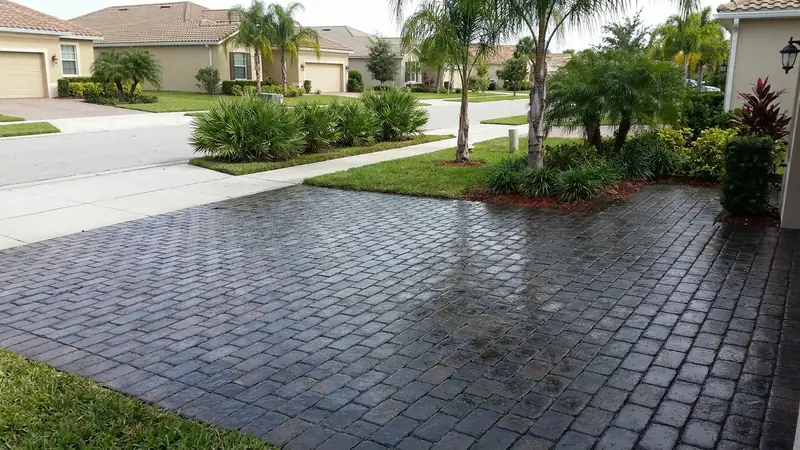
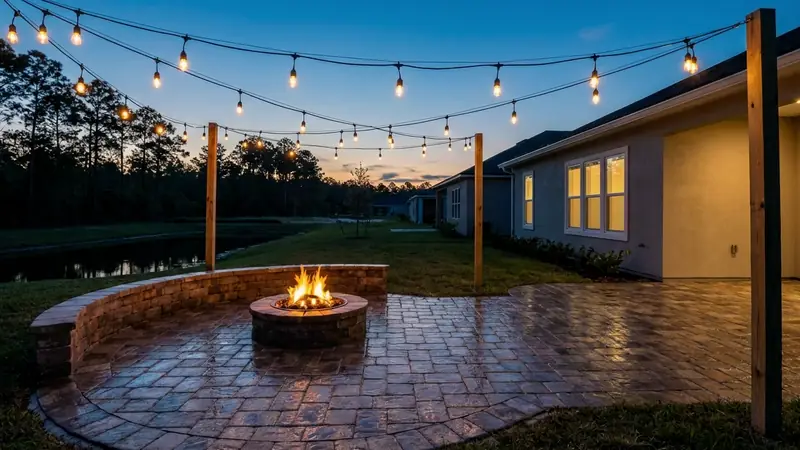
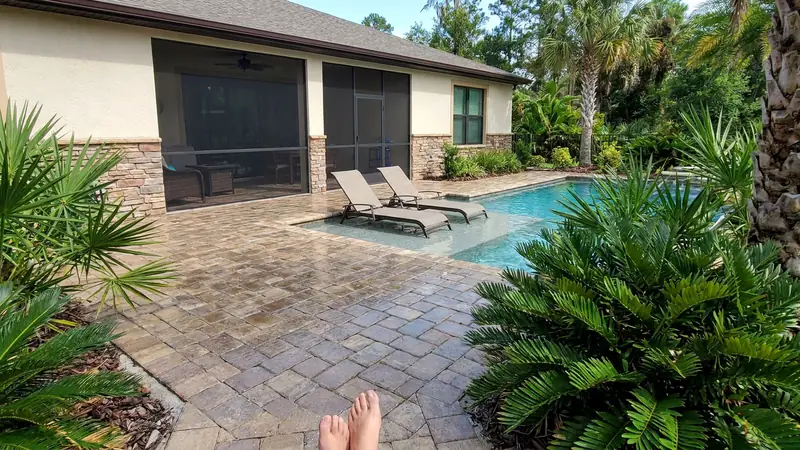
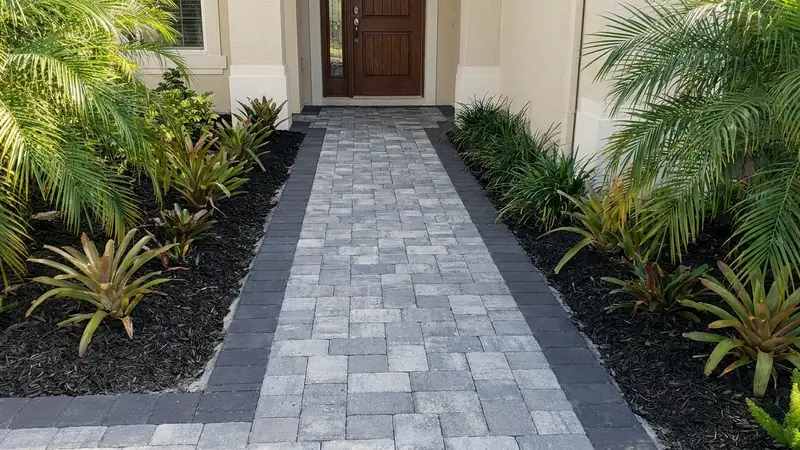
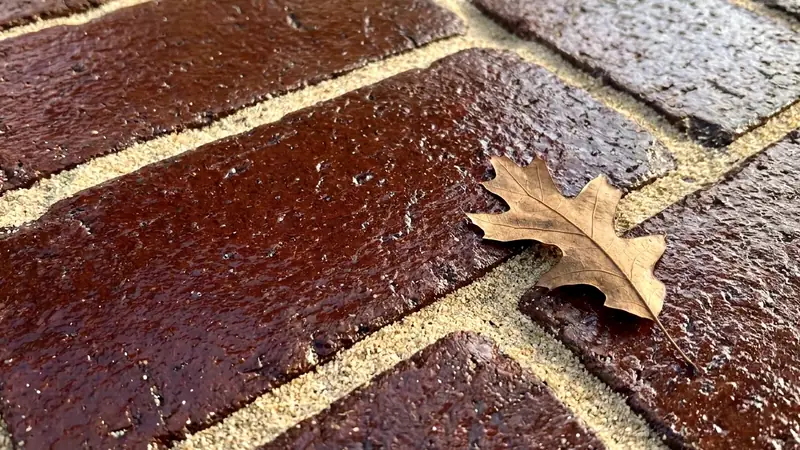
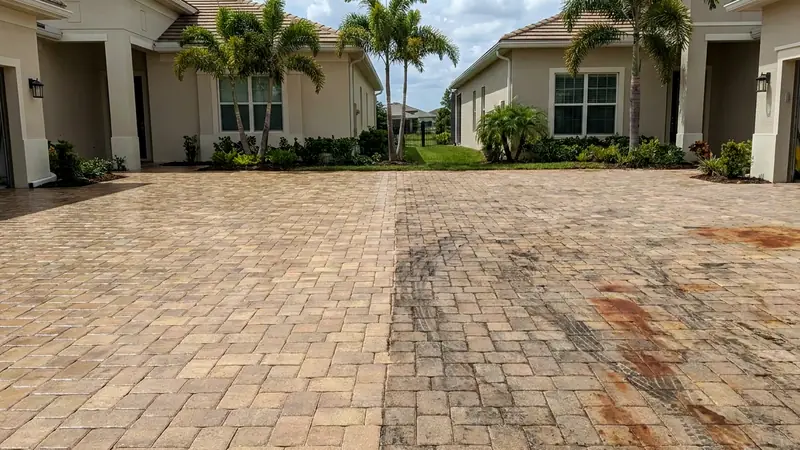
What do sealed pavers look like around Saint Johns?
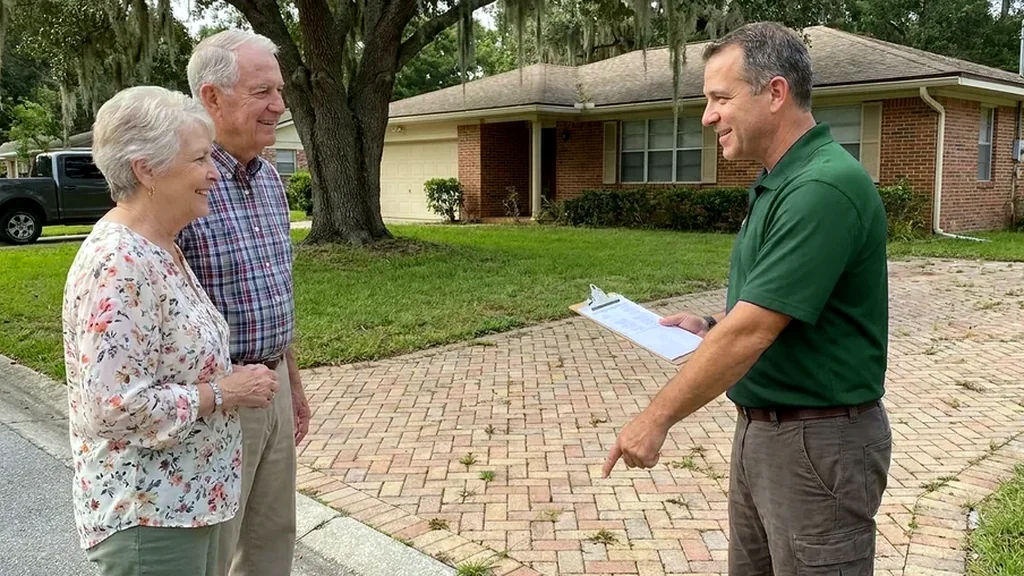
Why local matters in Saint Johns
A contractor who works Saint Johns knows the communities by name, and each has its own paver patterns. Naming Aberdeen or Julington Creek Plantation tells them what to expect before they arrive. A crew from outside the area has to guess. To reach a local contractor, call (904) 872-8339.
Place names matter here in another way. In 2005 a poll chose Saint Johns over Fruit Cove, St. Johns Cove, River Oaks and Bartram, and the mail used to say Jacksonville. So addresses can confuse a driver or a dispatcher. Give a street, a community and a cross street when you ask for a free estimate.
Local also means knowing the ground and the weather. Flat, sandy lots drain slowly, and afternoon storms can wipe out a plan. A local contractor leaves room in the schedule. If you can be flexible on dates, say so when you call (904) 872-8339.
How did Saint Johns get its name, and what is nearby?
Until 2005 the Postal Service listed this area under Jacksonville. That year a chamber of commerce poll chose Saint Johns over Fruit Cove, St. Johns Cove, River Oaks and Bartram. Some residents of the older communities of Fruit Cove and Switzerland objected. If you live in either, call (904) 872-8339.
Saint Johns lies in the northwest corner of the county, about midway between the downtowns of Jacksonville and St. Augustine. Elementary schools include Cunningham Creek, Durbin Creek, Hickory Creek and Julington Creek, and high schoolers attend Creekside or Bartram Trail. Alpine Groves Park holds a farmhouse from a former orange plantation. Mention the school or park nearest you when you ask for a free estimate.
Frequently Asked Questions
Is it good to seal pavers in Saint Johns?
For most homes, yes: sealer keeps joint sand in place and slows fading and stains. It does not fix sunken pavers or a failed base. In Saint Johns, where many driveways were laid by builders and never coated, a first seal is a common starting point. Your contractor can tell you after a look whether yours is a first coat or a recoat. That one fact changes the price and the plan.
How long do paver sealers last in Saint Johns?
Plan on two to five years between coats, which is the span the quotes give. Shade, sprinkler spray and heavy driveway use push toward the shorter end. One Jacksonville company says water that beads means the sealer is working, and water that soaks in means it is spent.
What is the average cost to seal pavers in Saint Johns?
In this region the published range is $1.75 to $3.25 per square foot to clean, sand and seal. A coat that has failed and must be stripped first raises the total. Ask for the total area in your Saint Johns quote so you can compare bids. Two quotes can look far apart when one measures more area.
Can a contractor clean, sand and seal my pavers in Saint Johns?
Yes. A local contractor handles the wash, the new joint sand and the sealer in one job. Have each bid spell out all three steps so the numbers line up. Add pool decks and walks to the same visit if you want them done.
Do my Saint Johns pavers need new sand before sealing?
In most cases, yes. Washing pulls sand from the joints, so it is replaced before the coat. Full joints keep weeds out and hold the pavers in place, and lost sand can widen joints and let soil in. Ask how much your seams need, since older, wider joints take more.
How soon can I seal new pavers in Saint Johns?
New pavers should wait about 60 to 90 days, according to a paver company near the coast. That gives trapped moisture time to escape and white haze, called efflorescence, time to surface. The contractor can treat the haze before any coat goes on. Sealing too early can trap that moisture, which is why the wait matters.
Can new sealer go over old sealer on my Saint Johns pavers?
Sometimes, but water-based sealer cannot go over solvent-based. The contractor needs to know what is on the surface. If a builder or an earlier owner coated the pavers, any receipt or product name helps. A small test spot is a common first step when nothing is known.
Should I ask the HOA before sealing pavers in Saint Johns?
It depends on your declaration. Florida law limits an association's review to what its documents say. One Jacksonville paver page says a natural-look sealer may count as upkeep, while a color-enhancing or glossy finish more likely needs approval.
What is the difference between film-forming and penetrating paver sealer?
A film-forming sealer sits on the surface and binds joint sand, often with a matte or wet look, and it protects the top layer. A penetrating sealer soaks in and leaves the look unchanged. The contractor can explain which fits your pavers and your finish. Water-based sealer cannot go over solvent-based, so the type already on the surface matters too.
How long should I stay off a freshly sealed driveway in Saint Johns?
One Jacksonville company puts walking at a few hours and driving at about a day. Weather and sealer type can change that. Ask for the exact wait on your driveway. Park on the street for a day and keep pets and sprinklers off it until the contractor says it is safe.
Does a Saint Johns reseal cost the same as a first seal?
The published range covers a clean, sand and seal. A first coat on unsealed pavers is often the simpler job. A coat that has failed and must be stripped raises the total, so ask which one you have.
Can pavers beside a pool cage in Saint Johns be sealed?
Yes. The contractor works around the cage and keeps rinse water out of the pool. Mention the cage and any screen doors when you ask, so the crew plans ladders and spray.
Ready for a Free Estimate in Saint Johns?
Call (904) 872-8339 and tell us about your pavers.
Free, no obligation